
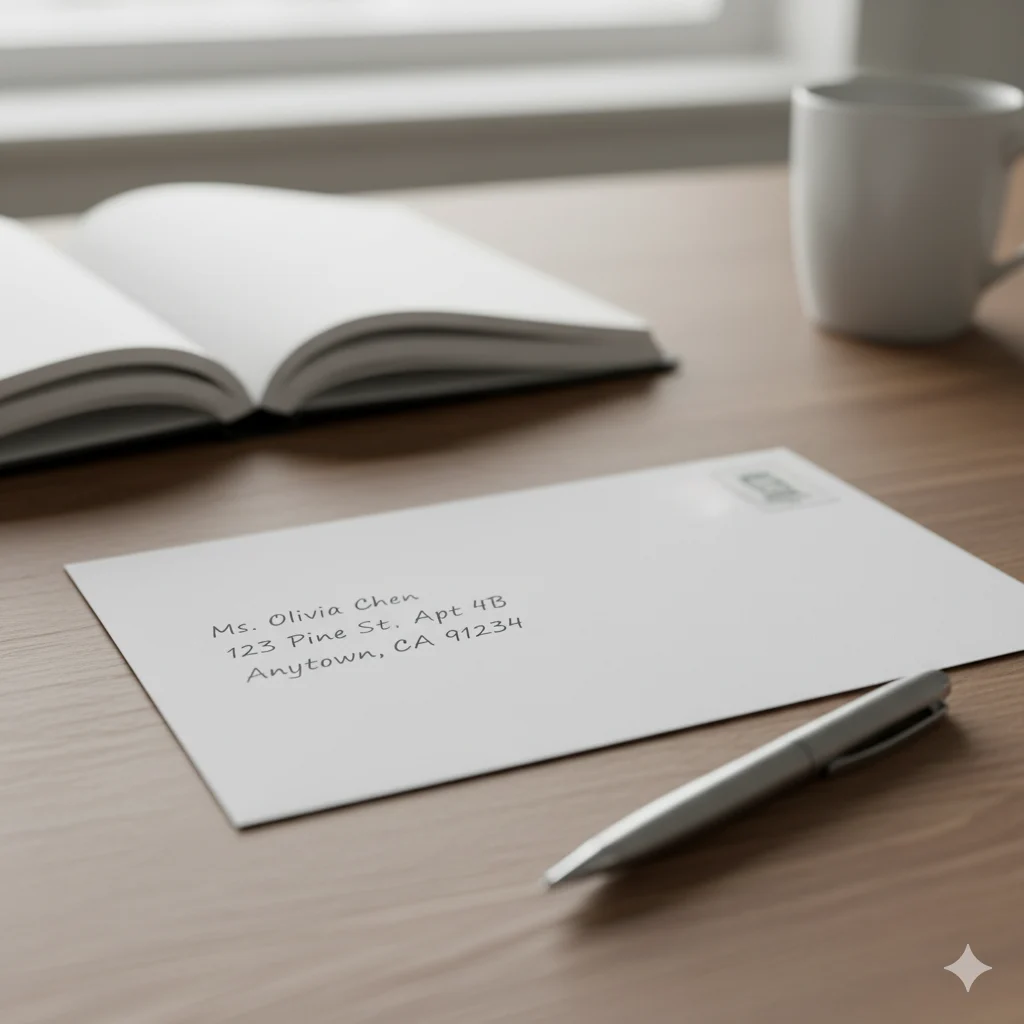

Many people assume sending mail is straightforward, but learning how to address an envelope correctly is more important than ever. Whether you’re sending a birthday card, an invitation, or business correspondence, properly formatted envelopes ensure your message reaches the right destination without delays. Small mistakes in recipient name format, return address placement, or postal rules can lead to lost or returned mail. This comprehensive envelope addressing guide will walk you through each step, from casual notes to formal documents, while covering proper envelope etiquette for every situation.
This guide is designed to help anyone, whether you’re mailing your first letter or improving your mailing tips for work or special occasions. By the end, you’ll be able to address letters with confidence and follow all relevant postal standards.
Why Proper Envelope Addressing Matters
Before diving into the step-by-step details, it helps to understand why taking the time to format envelopes correctly is essential. Here are a few key reasons:
1. Ensures Successful Delivery
Even small errors in handwriting, spacing, or address placement can confuse postal workers and sorting machines. When an envelope is addressed the right way, it moves through the system faster and more reliably.
2. Reflects Professionalism
In situations involving business correspondence, job applications, legal notices, or client communication, a properly addressed envelope communicates respect, organization, and credibility.
3. Makes Special Occasions More Meaningful
For events like weddings, graduations, and personal celebrations, addressing letters well shows care and effort. Guests appreciate the attention to detail, especially when handwritten.
4. Prevents Returns and Delays
If the return address placement or recipient details are off, your mail may come back or be discarded. Understanding postal rules from the start prevents frustration and wasted time.
Understanding Envelope Layout and Structure
Before writing anything, it’s helpful to know where each part of an address belongs. Here’s a breakdown of the envelope sections used in nearly all formats:
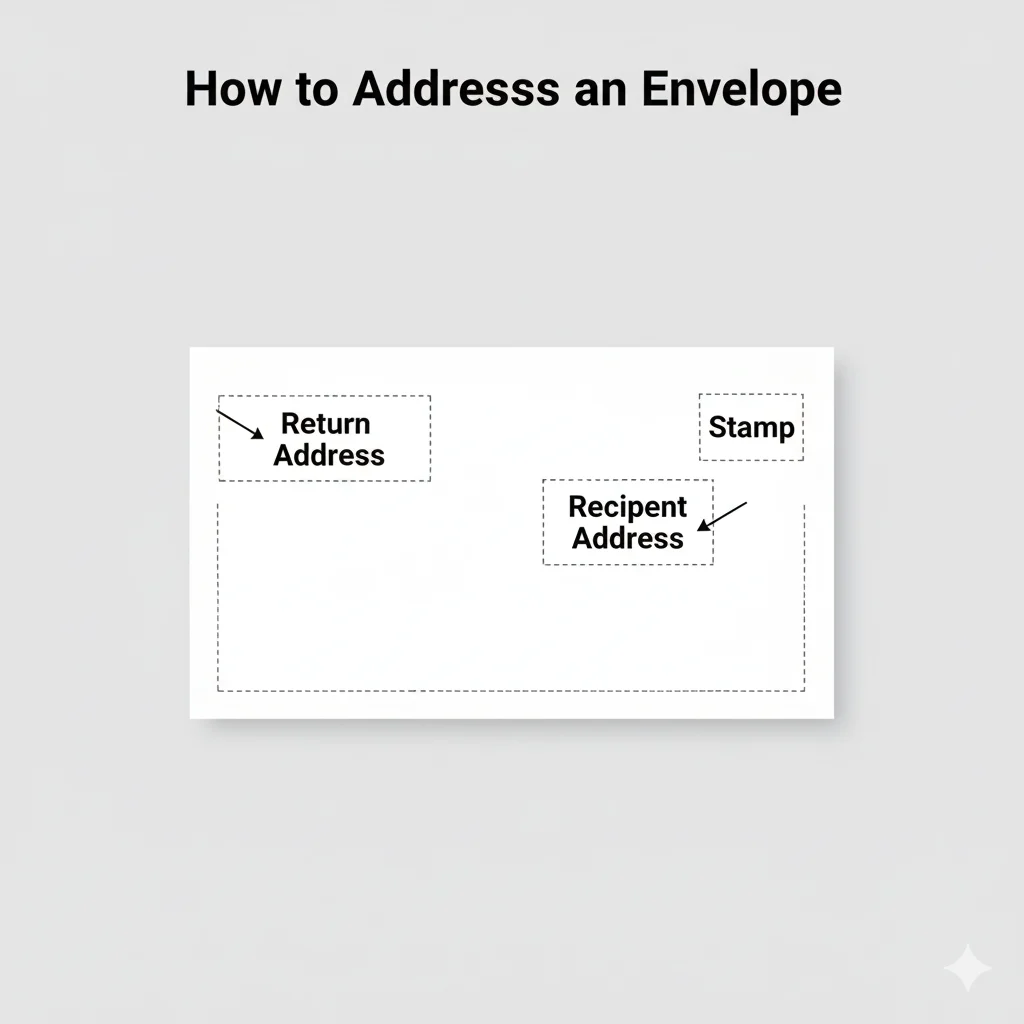
- Top-left corner: This is where your return address goes. It should include your name and mailing address in the correct format.
- Center of the envelope: The recipient’s name and full mailing address appear here.
- Top-right corner: Reserved for the postage stamp.
Accurate placement prevents confusion and keeps mail from being misrouted.
Step-by-Step Instructions on How to Address an Envelope
Let’s walk through the core process from start to finish.
Step 1: Write the Return Address Correctly
Your return address lets postal services return the envelope if the recipient address is incorrect or undeliverable. Here’s the standard format used on most mail:
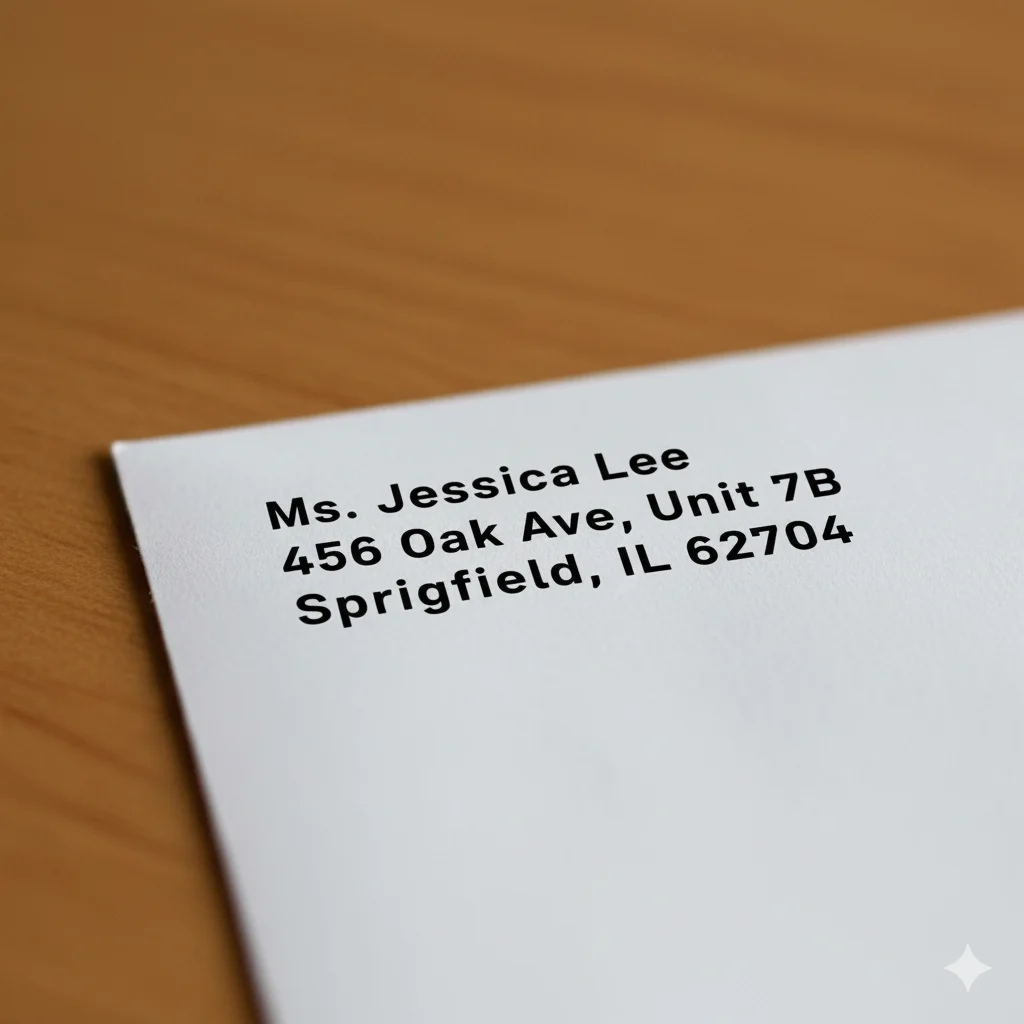
Line 1: Your full name
Line 2: Street address or P.O. box
Line 3: City, state, ZIP code
Example:
Sarah Anderson
2147 Cherry Lane
Madison, WI 53715
Return address placement should always be the top-left corner. If you’re using printed labels, make sure they are straight and legible.
Step 2: Address the Recipient Properly
This section goes in the center of the envelope and should follow an orderly format. Start with the proper name, and follow with the full street or P.O. box, then the city, state, and ZIP code.
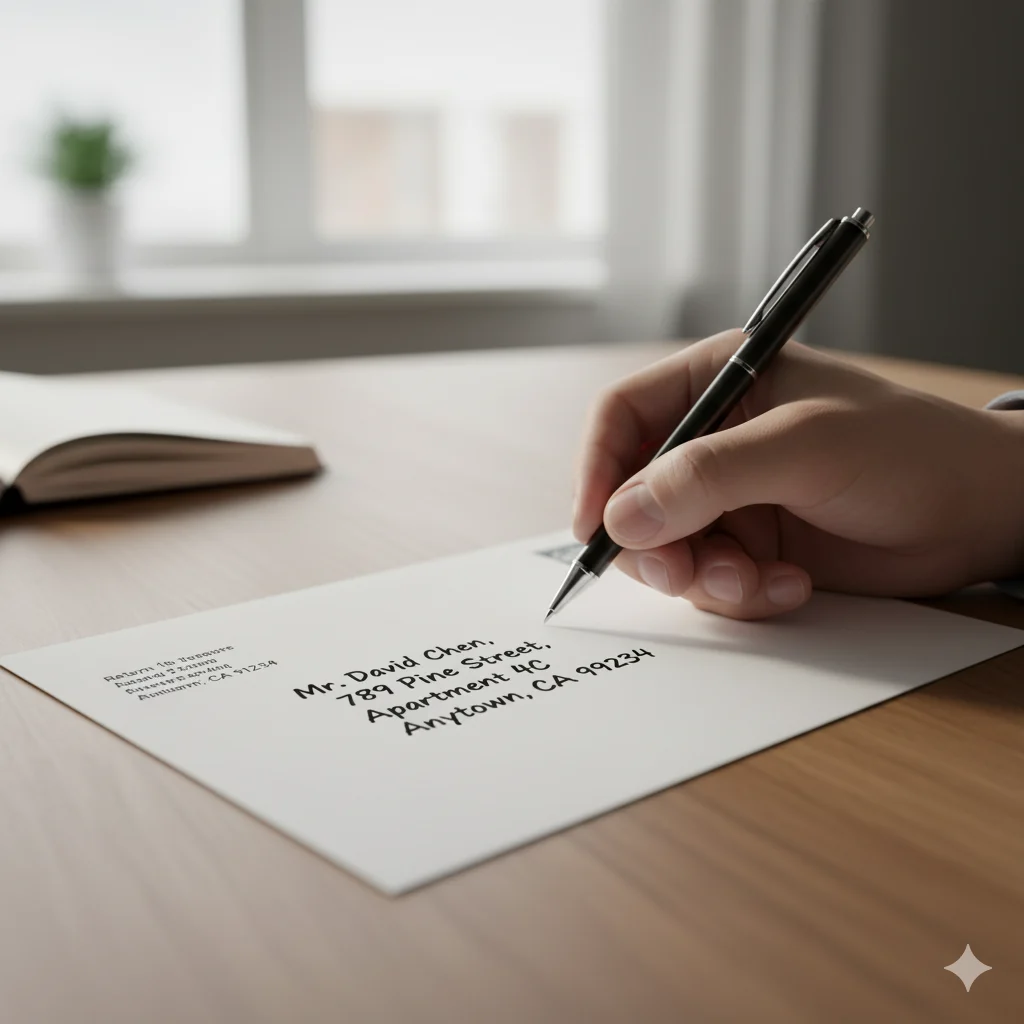
Example:
Mr. Daniel Brooks
458 West Elm Street
Columbus, OH 43215
When addressing letters to organizations or companies, include the business name above or below the recipient name, depending on the situation.
Step 3: Use the Correct Recipient Name Format
When deciding how formal or casual to be, consider your relationship with the recipient and the context of the mailing. Options can include:
- Full name only
- Titles (Mr., Mrs., Ms., Dr.)
- Couple formats (Mr. and Mrs. James Carter)
- Professional titles (Dr. Olivia Chen, Professor Mark Ellis)
Following proper envelope etiquette creates a polished impression.
Step 4: Apply the Stamp Appropriately
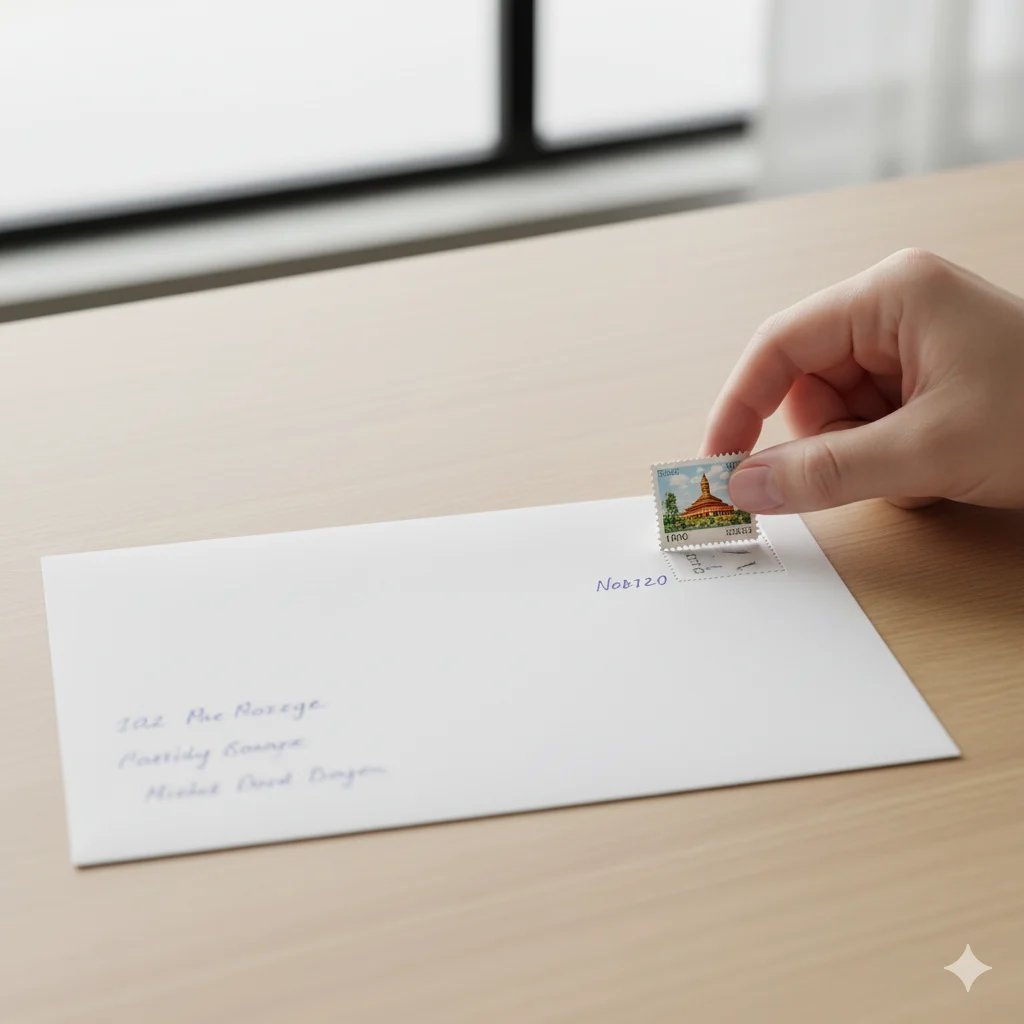
The stamp belongs in the upper-right corner. If you’re mailing internationally or using priority or certified mail, choose the appropriate type of postage. Avoid covering any part of the address.
Special Considerations for Different Types of Mail
Not all envelopes are handled equally. Depending on who you’re mailing to and why, slight variations in formatting may apply.
Formal and Business Correspondence
Business correspondence often requires a clean, professional look, even when handwritten. Include:
- Title and full name
- Company name (if applicable)
- Street address or P.O. box
- City, state, and ZIP code
If you’re mailing within a company or government agency, you may include a department or division line.
International Mail Formatting
When mailing outside the United States, include the country name on the final line of the address in capital letters. Postal rules may vary slightly by country, but U.S. guidelines generally accept:
Angela Ramos
14 Seymour Road
London SW1A 2AA
UNITED KINGDOM
Always double-check international address standards before mailing.
Personal Letters and Cards
For birthdays, holidays, or friendly notes, the tone can be casual. Even so, maintaining clarity helps ensure delivery. You can skip titles if the relationship is informal, but always include full mailing details.
Handwriting vs. Printing: Which Is Better?
Both handwriting and printing are acceptable when learning how to address an envelope, but legibility is the priority.
When to Handwrite
- Personal cards
- Wedding invitations
- Small volumes of letters
Use black or blue ink, print clearly, and avoid decorative fonts for addresses.
When to Print or Use Labels
- Bulk greeting cards
- Business mail
- Professional mailings
Print in a standard font, at least 10–12 point size, in dark ink.
Tips for Clean and Readable Envelopes
Follow these mailing tips to make sure your message looks neat and professional:
- Write or print clearly — avoid cursive that’s hard to read.
- Use straight lines — consider using a guide or light pencil lines.
- Avoid smudges and stickers — keep the center area clean.
- Double-check spellings — especially street names and ZIP codes.
- Confirm return address placement — always top-left, not bottom.
Common Mistakes to Avoid
Many people skip key details without realizing it. Watch out for these mistakes:
- Putting the return address on the back flap instead of top-left
- Missing ZIP code or incorrect state abbreviation
- Writing in pencil or light-colored ink
- Including commas in the address line (most postal rules discourage it)
- Placing the stamp on the left side or overlapping the recipient address
Proper Envelope Etiquette for Special Occasions
Addressing letters for events like weddings, graduations, or ceremonies requires extra attention to courtesy and clarity.
Couples
- Mr. and Mrs. Sean Patel (for married couples sharing a last name)
- Emily Rivera and Jonathan Thomas (for unmarried or nontraditional couples)
Families
- The Garcia Family
- John, Megan, and Oliver Russell
Titles
Include professional or honorific titles when appropriate, such as Dr., Rev., or Hon.
Business Correspondence and Professional Standards
In business correspondence, taking the time to follow accepted formatting communicates reliability. Be sure to include:
- Full names and job titles
- Company names when relevant
- Department or office name (if applicable)
- Clean, well-centered formatting
Even in the digital age, many industries still rely on mailed contracts, legal forms, and official notices.
Return Address Placement and Formatting
The return address should not be oversized or overly stylized. Keep it small and clear. While preprinted envelopes are fine, handwritten versions should follow the same three-line formatting.
Never place a return address on the bottom or right side of an envelope. Postal services may misread it as the recipient’s location if not properly placed.
Addressing Different Envelope Sizes
Envelopes come in a variety of shapes and sizes, from small invitation cards to large manila envelopes. While the layout is similar, be sure to adjust spacing to achieve balance:
- Small envelopes: Write smaller but still legible.
- Large envelopes: Keep the recipient address centered and not too wide across.
- Window envelopes: Make sure the printed address aligns perfectly with the window cutout.
Postal Rules to Know Before Sending
Postal rules may change over time, and accuracy improves mailing success. Here are some helpful guidelines:
- Use standard abbreviations for states (e.g., CA, TX, NY).
- ZIP codes should be five digits; add four more digits if available.
- Avoid special characters or symbols.
- Use capital letters if printing the address in block style.
Following these suggestions helps your envelope pass through automated sorting systems more easily.
Mailing Tips for Kids, Students, and Beginners
If you’re helping a child or someone new to writing letters, keep the steps simple:
- Write their name clearly.
- Ask for the full street address.
- Place their name and address in the center.
- Add your return address in the top-left.
- Put a stamp on the upper-right corner.
These basics provide a strong start to lifelong envelope etiquette.
Double-Checking Before Sending
Always do a quick review before mailing:
- Is the return address correct?
- Is the recipient name format appropriate?
- Is the ZIP code correct?
- Is the stamp placed correctly?
- Is the address easy to read?
Taking 30 seconds to review saves time and prevents delivery problems.
FAQs About How to Address an Envelope
Q: Do I always need a return address?
A: While it’s not mandatory for all mail, it is strongly recommended. Without it, undeliverable letters cannot be sent back.
Q: Should I use titles like Mr. or Ms.?
A: Titles are optional for casual mail, but strongly preferred for formal and business correspondence.
Q: What if I’m unsure of the recipient’s ZIP code?
A: Look it up online or double-check with the person before mailing to avoid delays.
Q: Can I put a return address on the back flap?
A: It’s common for greeting cards, but many postal services still prefer it on the top-left front corner.
Q: Is it okay to print envelope labels?
A: Yes, especially for large mailings. Just make sure the font is clear and easy to scan.
Final Thoughts
Addressing letters correctly may seem small, but it forms the foundation of proper envelope etiquette. Whether you’re sending business correspondence, personal notes, or event invitations, knowing exactly how to address an envelope ensures your message arrives safely. By following the correct return address placement, formatting the recipient name properly, and understanding postal rules, you’ll avoid delays and create a professional impression every time.
No matter the occasion, learning the right way to format addresses is a useful lifelong skill that supports communication at home, in work environments, and across borders.